
Word count: 2494 | Reading time: 10 min read
Cover Story
After 30 years in the DA’s office, she’s seen it all. Assistant DA Judith Rubino speaks out in a rare interview — prompted by the latest chapter in the ongoing saga of the Kimberly Ernest murder.
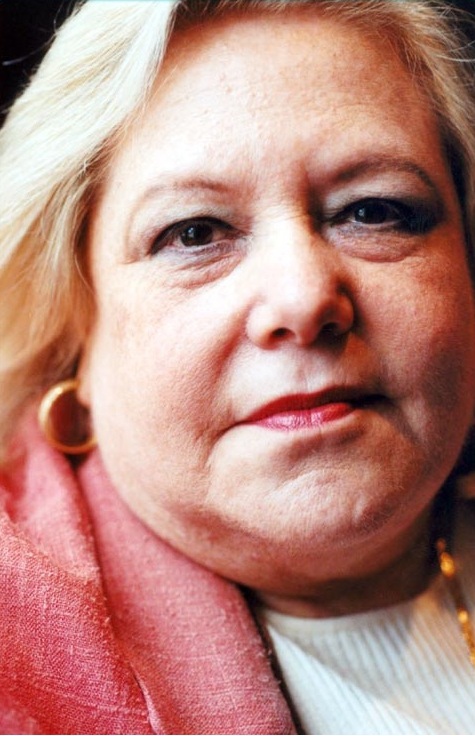
In her three decades as an assistant district attorney, under the likes of Specter, Rendell, Fitzpatrick, Castille and Abraham, Judi Rubino has seen thousands and thousands of pages of all kinds of documents.
But she has never seen her own credit report.
Now she wants to. Because private investigators dug it up on behalf of an attorney who is suing Philadelphia for $75 million — a festering mess of a civil suit that seeks to cash in on a brutal 1995 murder.
The lawsuit was filed on behalf of the two men acquitted of charges that they murdered Kimberly Ernest, known after her death as “The Center City Jogger” because she was killed during her morning run near Rittenhouse Square. In his effort to beat the city, attorney Fred Ambrose tried to prove that the mayor, the cops, the DA and the mob were involved in a major controversy to pin the murder on the wrong guys. In trying to win, Ambrose and a platoon of nitwit private investigators intimidated witnesses, made up evidence, lied in court documents and, perhaps, even bribed a juror in the criminal case.
Thanks to Ambrose, data about what Judi Rubino earns and spends is now part of this twisted, ongoing saga. And now, the 57-year-old Rubino figures that it’s about time she had a gander at her own records.
“We are looking into what we can do,” she says over lunch at a swell little dive three doors down from her office in a rare public interview made possible, in no small measure, by Ambrose’s actions. “It is an invasion of privacy.”
Judith Frankel Rubino, the longest consecutively serving ADA in Lynne Abraham’s office, has wrestled with the worst demons.
A fishmonger who eviscerated a woman in Frankford. A father who stabbed his two children to get back at their mother, whom he suspected of having an Internet affair with another woman. Cops who had their brains blown out.
She started out as a private litigator for Mesirov Gelman, a prestigious law firm. Sometime around Woodstock, Rubino (then Frankel), realized that her rising stock wasn’t rising quickly enough.
“By 1969 I saw the handwriting on the wall,” she says. “I was not going to make partner.”
So she left and headed for the District Attorney’s Office, run by an ambitious rising chief solicitor named Arlen Specter.
Specter’s office had an all-star line-up, including his administrator Dick Sprague, who at the top of his game was one of the ablest attorneys to ever work a courtroom; Lynne Abraham; and another ambitious young attorney named Ed Rendell.
“It was a great office,” she says, recalling the days with a broad smile.
As for Mesirov Gelman, “It took them another 17 years before they had their first female partner,” Rubino says. “I’m not looking back.”
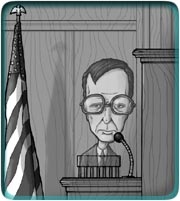
Vanishing act: Lawyer Fred Ambrose was reported missing by his wife Mary in April.
In Specter’s office, under the tutelage of Sprague, Rendell and Abraham, Rubino moved from trying robberies to going after killers.
But first she had to learn how to handle a jury.
“I don’t remember the case, but I do remember the jury, because I’d never seen a jury before,” she says. “I was in the waiver room with [ADA] Jeff Brodkin, and I asked him, ‘What do I do?’ I won.”
Over the years, Rubino continued to win, sending 20 men to death row (eight were later taken off when the U.S. Supreme Court overturned the death penalty).
The cases she really remembers? The murders of children and cops.
The details were always gruesome.
In January 1998, a city electrician named Willie McClellan snapped. Furious at what he believed to be his wife Juanita’s Internet affair with another woman, McClellan stabbed his two children after stuffing socks in their mouths.
McClellan was arrested and jailed, and 18 months later found himself on the wrong end of Judi Rubino’s justice.
On June 8, 1999, McClellan stood before Judge James A. Lineberger and, just one day after the trial began, pleaded guilty — “stunning a Philadelphia courtroom full of people prepared for the second day of his murder trial,” wrote Linda Lloyd in the Philadelphia Inquirer.
“The things that people do, especially the killing of children, you try not to think of it,” Rubino says.
She can’t help it, though.
“I have their picture sitting in my office,” she says. “They were adorable children. Her brother was a minister. It was a lovely family.”
Not to McClellan. After killing the kids, he used his own blood to smear a spiteful message to his wife.
“It just kills you thinking about it,” Rubino says.
Rubino has a particular affinity for trying accused cop killers. It may have something to do with the fact that her husband, James Rubino, happens to be a cop. A former member of the Philly police department’s SWAT team, he was promoted by DA Ed Rendell to the county detective squad. Now he is Drexel University’s chief investigator.
The law met the order in a courtroom one day.
“He was on a couple of cases that I had,” she recalls fondly.
After dating for nearly four years (during which time he was embroiled in a contested divorce), the attorney and the officer married.
“It started a trend,” says Rubino. “We were the first union in the department. Now a lot of DAs are married. Who do we meet but lawyers and cops? It was a good match. He would catch them, and I would prosecute.”
Rubino says it was particularly gratifying to nail Edward Bracy, who, standing on the hood of a police car, fired point-blank into the brain of Police Officer Danny Boyle, the son of a Philly cop who had recently celebrated his first year on the job.
“It was such a sad case,” says Rubino. “Danny was only 21. It was a very harrowing case. Bracy came through a skylight into a woman’s house, then set himself on fire. When we went to trial, he’d had all these operations, and he looked pretty freaky with patches of skin.”
The 23-and-a-half-year marriage, his second, her first, has endured through mutual respect, says Rubino. “I knew enough to know how tough his job was,” Rubino says. “I don’t think all women are really aware of exactly what goes on. DAs certainly do. And he can appreciate what we do.”
Now the prosecutor and the cop find themselves once again teamed up, this time against a now-disappeared attorney named Frederick Ambrose and a bumbling band of henchmen.
The credit report was salt in a six-year-old wound.
Rubino had never lost a big case.
Until the Kimberly Ernest killing.
Now, thanks to Ambrose, not only is that loss still nagging Rubino, she has to wonder about who has seen her credit report and what, if any, damage has been done.
“I think it stinks,” says Rubino. “My husband is livid.”
Rubino’s not the only one whose credit history was obtained by Fred Ambrose in his efforts to win a boatload of taxpayer money, according to the bumbling PI Stephen Stouffer at his April 2, 2001, deposition.
Ambrose’s motives for going after these credit histories is unclear, and he is not around to answer questions. His wife, Mary, filed a Missing Persons Report on him in April, and repeated efforts to discover his whereabouts have proven unsuccessful. It seems likely, however, that he was trying to find ways to discredit anyone remotely connected with the alleged “conspiracy.”
Ambrose also pulled a report on Jay Jewell Lambert, a patrician partner at Duane Morris & Heckscher whose son John would be named by Ambrose as “the real killer” of Ernest. (Shortly after publication of a City Paper story on the Ambrose antics, Lambert filed three lawsuits of his own against Ambrose et al, which forced Stouffer’s testimony. City Paper obtained copies of the court documents, including the credit reports.)
Ambrose didn’t limit his fishing expedition to lawyers. He pulled Homicide Detective Thomas Augustine’s credit report as well. Augustine’s involvement with the investigation began when he was asked to drive home Herbie Haak’s stepfather, a would-be witness. Thanks to Ambrose’s continuing campaign, the ride continues to haunt Augustine.
Ambrose also pulled the records of Dennis Dusak, Augustine’s partner. And Rick Hendricks, the lover of John Lambert, who according to Ambrose was the beneficiary of a wide-ranging conspiracy from the mayor to the mob.
Neither Lambert, the lawyer, nor Augustine will talk about these actions. John Lambert can’t. He is dead, having succumbed to a drug overdose.
“The Lambert thing was really unbelievable,” says Rubino, who for the first time has agreed to talk about the Ernest trial and its aftermath. “I really think that they killed [John] Lambert. I mean, I think that he died as a result of all this stuff.”
Sitting down over lunch, Judi Rubino, dressed in a luminescent blue dress, is more than happy to talk, something she has been reluctant to do over the years.
It was she, in fact, who asked Judge David Savitt to impose a gag order on the trial of Herbie Haak and Ritchie Wise, the two crumbums accused of killing Ernest, after Wise allegedly threatened to rape and kill Haak’s girlfriend, prompting Haak to run scared to the police. He blamed the then-unsolved Ernest killing on Wise.
“Herbie broke the whole case, by his phone calls,” Rubino ruminates. “It’s not like the police ever heard of” Haak and Wise, a couple of low-rent, gay-bashing burglars, in connection with the Ernest killing. “With an even playing field, we would have won the case.”
Rubino says she wanted a gag order to stop defense attorneys from leaking information to the press. It was hard enough to make the case against Haak and Wise, says Rubino, without the added strain of watching the defense lay out its spin on events.
Rubino had a lot to overcome. Kimberly Ernest’s active sex life made obtaining DNA evidence from her body a challenge. That only became an issue, says Rubino, because the Medical Examiner’s Office made a huge mistake speculating about the meaning of a minute amount of sperm found in Ernest’s rectum.
“The problem wasn’t with the DNA, it was with the medical examiner,” says Rubino bluntly. “He wrote his report wrong. This is a situation where there were fresh vaginal tears and no sperm, but no rectal tears, with a small quantity of whole, degenerated sperm, and in his report the medical examiner said that the rectal area, quote, ‘was further evidence of sexual assault.’ This is incorrect; it was not.”
Then there were the confessions that weren’t. Rubino argued in court that, despite claims by Haak and Wise of being beaten into signing confessions, nothing of the kind ever happened. She cited microscopic evidence that contradicted the claim of Haak and Wise that they had signed blank pages.
There were also witnesses who couldn’t be used, like Haak’s father-in-law, who tried to be helpful by making up fake evidence. By introducing Haak’s parents, Rubino had hoped to show that Wise not only killed Kimberly Ernest, but threatened the life of Haak’s mother Phyllis Hall as well.
“I was just afraid to put her on,” Rubino says, resigned to being stuck with bad evidence. “I am not going to put on any witness that’s lying. Plus, Ritchie [Wise] went to her house, and threatened her: ‘If you tell the police what I did with your son, we’ll kill him and your boyfriend too.’”
As bad as things were evidence-wise, Rubino says she believes to this day that the deck was stacked against her jury-wise as well. It was around the time of the O.J. Simpson trial, and the buffoonery of the L.A. prosecutor’s office was not playing well in this Philadelphia courtroom.
“We know that the foreman said to the other jurors, ‘Well, it took the O.J. jury 20 minutes, let’s see if we can beat it.’”
There were other problems with the jury, she says.
“We found out later that one of the jurors had a cell phone with him in the hotel, and even though they were sequestered, he was talking to people,” Rubino says.
Courthouse sources, she adds, reported to her that jurors “bought a T-shirt for the court officer. It was a Mickey Mouse T-shirt, and supposedly for a ‘Mickey Mouse’ case. She [the court officer] didn’t tell the judge. So apparently [the jury and the officer] had talked about [the case] beforehand. I mean, everything was stacked against us.”
There is even testimony, in the form of a statement taken by a private investigator working for the city, that a juror was bribed.
“You asked me if I was positive that a juror was paid off, and I told you I was positive,” said a convicted con man named John Groff, who claimed the bribery was at the behest of Sam Malat, the lawyer who represented Wise in the civil suit against the city, and who now, in Ambrose’s absence, has taken over all his cases.
Malat vociferously denies that, saying “there is not one ounce of truth in the statement” made by Groff, who had been his office assistant. “I have a restraining order against him because he threatened the life of a family member.”
Efforts to reach Groff, including letters to the prison in New Jersey where he was once incarcerated, have been unsuccessful.
“It does not surprise me at all,” says Rubino about the possibility that a juror was bribed. “Given everything those guys have done ever since [the trial].”
Add it all up, Rubino says, and you have a mess. The jury came back in less than three hours and Haak and Wise walked.
“Oh, it was just horrible,” says Rubino, over the din of noon diners. “Because we knew that they were guilty. I still have no doubt that they were guilty. And it was one of the very few cases over 30 years of prosecuting that came out bad, and I think that they beat a case on which they should have been convicted. And if they had a juror bribed, then that’s even more evidence of it.”
Rubino has spoken candidly for two hours, sharing her feelings about losing a big case and suffering through its never-ending aftermath.
She has just one final request.
“Can you fax me a copy of my credit report?” she asks.